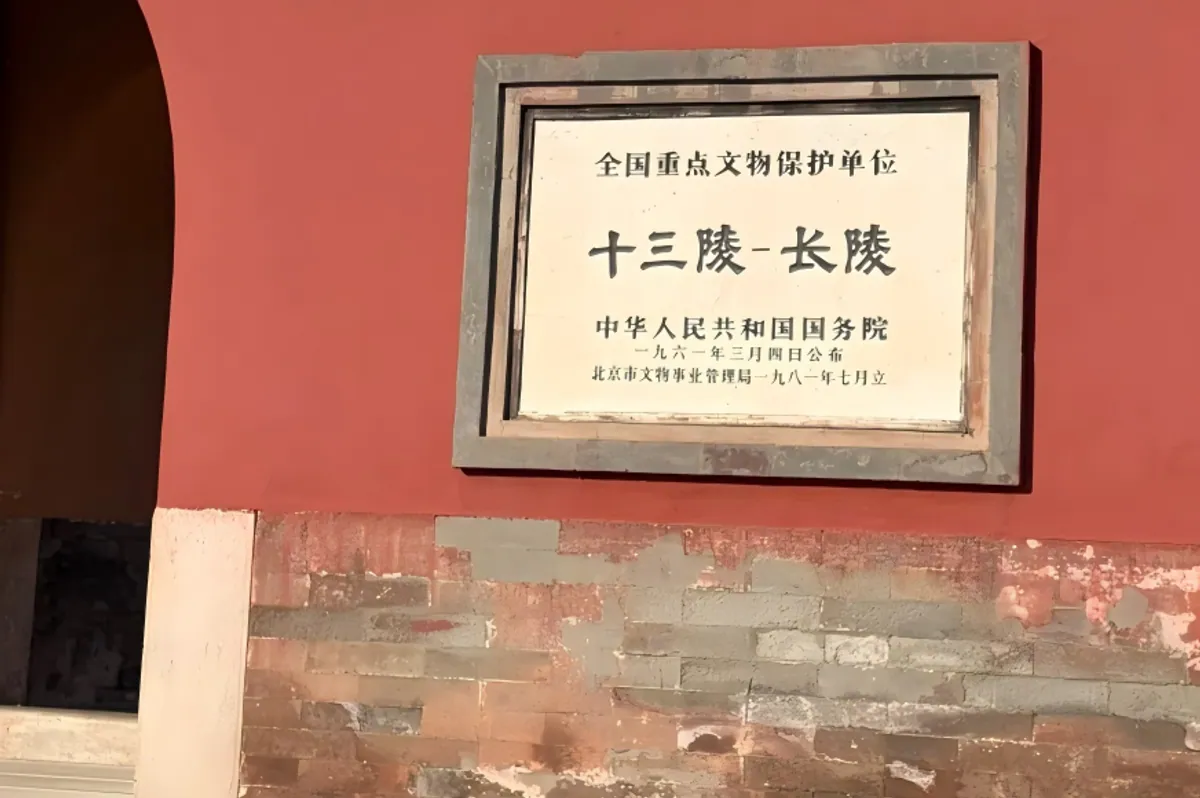
Shisanling · Beijing · 1409-1644
The Ming Tombs (Shisanling) are the burial ground of thirteen of the sixteen Ming dynasty emperors — the largest imperial cemetery complex in the world, set in a valley 40 kilometers north of Beijing. Construction began in 1409 with the tomb of the Yongle Emperor and continued for over two centuries. The approach is a 7-kilometer Sacred Way lined with 36 stone guardians, and the excavated Dingling mausoleum lets visitors descend 27 meters into the only Ming imperial underground palace ever opened — five column-free stone halls that mirror the courtyard hierarchy of above-ground palaces.
The approach to the Ming Tombs is a 7-kilometer Sacred Way (shendao) lined with 18 pairs of stone guardian figures — lions, camels, elephants, horses, and civil and military officials. The path begins at the Great Red Gate and passes through the five-arch Memorial Gateway (built 1540), the largest stone archway in China. The tomb builders chose the site by geomancy: the valley of Tianshou Mountain, ringed by hills that face south like a great armchair, with a stream running in front — the classic feng shui formula for imperial burial.
The composition of the Sacred Way — a symbolic journey from the mundane world to the sacred realm — is the most complete surviving example of Chinese funerary planning. Its avenue turns once, bends again, and rises gradually so that the visitor never sees the tombs until the last moment; the 36 stone beasts and officials, arranged in alternating pairs, grow larger toward the tombs, compressing the approach into a ritual of anticipation that dates back to Han dynasty imperial tombs.
The Dingling mausoleum, built for the Wanli Emperor (1573-1620), is the only Ming tomb to have been excavated. In 1956-58, archaeologists opened its 27-meter-deep underground palace, passing through two 4-ton marble doors sealed by a 'self-locking stone' (zilaishi) that dropped into place when the tomb was closed. Beyond them lay five stone halls vaulted entirely without a single supporting column — an architecture of pure masonry compression.
The tomb contained the emperor and two empresses, along with 3,000 artifacts: the emperor's gold filigree crown woven from 518 grams of pure gold, jade belts, silk robes, and wooden figurines replacing the human sacrifices of earlier eras. The five-chamber plan — antechamber, central hall, and rear chamber linked by side halls — mirrors the courtyard hierarchy of above-ground palace architecture, with the imperial coffins raised on a platform in the rear hall exactly where the emperor's throne would stand in a palace.
Each of the thirteen mausolea follows the same axial template as the Forbidden City: a stele pavilion, the Hall of Eminent Favors (Lingen Dian) for sacrificial rites, a spirit tower with the emperor's title inscribed, and a walled burial mound (baocheng). The number of courtyards, size of halls, and richness of decoration were regulated by the same building codes as imperial palaces.
The largest, Changling (1409-1427), preserves its original 66-meter-wide Hall of Eminent Favors built of 60 whole nanmu logs — the largest surviving nanmu hall in China, never painted, its dark golden timber left exposed. Because the valley was closed to outsiders after the dynasty fell, the tombs escaped the rebuilding that altered so many Ming buildings, preserving 500-year-old painted beams and dougong brackets in near-original condition.
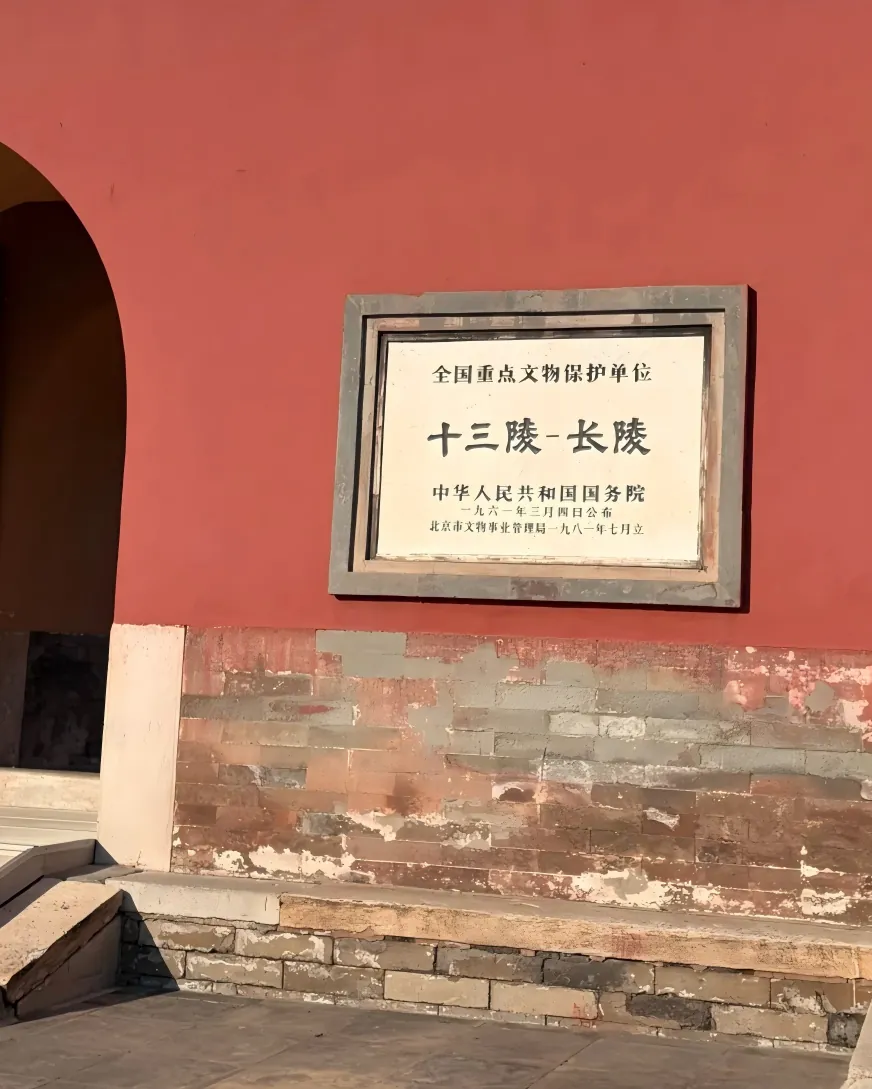
Best Time to Visit
September-October; spring plum blossoms in April
Photography Tips
Sacred Way with autumn foliage; Memorial Gateway at golden hour
How to Get There
Subway Changping Line to Changping Dongguan, then bus 314 or taxi; or join a day tour from Beijing
Two tombs plus the Sacred Way are fully open: Changling (the largest, with its magnificent 60-pillar Hall of Eminent Favors) and Dingling (the only tomb with its underground palace accessible — visitors descend 27 meters into the five vaulted stone halls).
The founder, Hongwu, is buried at Xiaoling in Nanjing; the Jianwen Emperor vanished during his uncle's coup and has no tomb; and Jingtai, deposed by his brother, was buried as a prince on Beijing's Western Hills. The remaining 13 emperors lie here at Shisanling (Thirteen Tombs).
Yes — Dingling is the only Ming imperial tomb whose underground palace is open to the public. The five stone halls, vaulted entirely without columns, contained the Wanli Emperor, two empresses, and some 3,000 artifacts now displayed in the on-site museum.