Timeline

Chinese Architecture Through the Dynasties

Each dynasty left its distinctive mark on China's architectural heritage. Explore 3,000 years of evolution in structure, style, and symbolism.

Architecture is the most durable record a dynasty leaves behind. When the Shang raised rammed-earth walls at Anyang, when the Han built timber towers over brick cores, when the Tang swept the world's largest capital city onto a grid of 108 wards — each period's buildings encoded its ambitions, its beliefs, and its available technology.

This timeline presents nine major dynastic periods in order. Each entry summarizes the period's defining innovations and links to a full reference page covering structural systems, famous surviving monuments, and the cultural forces behind the style. For side-by-side comparison, open the comparison tool; for the building blocks that persist across all periods, see the elements section.

If you are new to the subject, the Tang and Song dynasties make the best starting point — together they define the classical ideal of Chinese architecture, and their finest surviving structures (the Foguang Temple and the Yingxian Pagoda) can still be visited today.

Shang Dynasty architecture
1600-1046 BCE

Shang Dynasty

Rammed earth foundations, early timber frames, and the first north-south axial planning.

Key Features
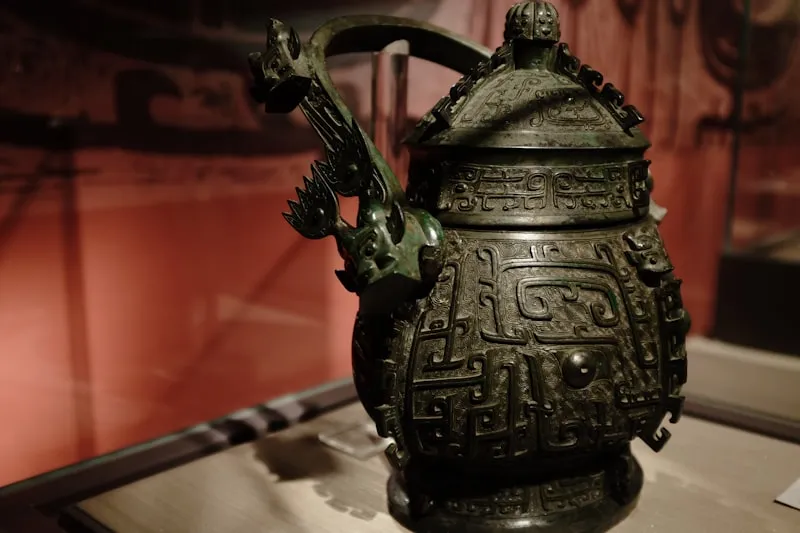
Rammed-earth (hangtu) foundationsTimber post-and-beam constructionNorth-south axial orientation+2 more
Explore Shang architecture
Zhou Dynasty architecture
1046-256 BCE

Zhou Dynasty

Codified courtyard compounds, social-rank building regulations, and the emergence of roof tiles.

Key Features

Courtyard compound (siheyuan) standardizationRank-based building codesCeramic roof tiles+2 more
Explore Zhou architecture
Qin Dynasty architecture
221-206 BCE

Qin Dynasty

Unprecedented monumental scale, standardization, and the first unified Great Wall.

Key Features
Monumental imperial scaleStandardized building componentsGreat Wall unification+2 more
Explore Qin architecture
Han Dynasty architecture
206 BCE-220 CE

Han Dynasty

Multi-story towers, mature dougong, ceramic roofing, and the arrival of Buddhist architecture.

Key Features

Multi-story towers (que)Mature dougong bracketsGlazed ceramic roof tiles+2 more
Explore Han architecture
Tang Dynasty architecture
618-907 CE

Tang Dynasty

The golden age: bold proportions, dramatic eaves, and the oldest surviving timber structures.

Key Features
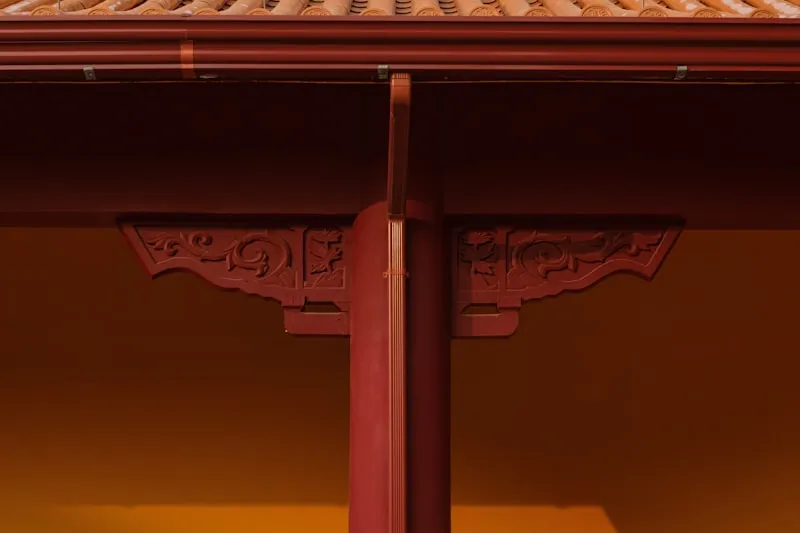
Bold, masculine proportionsWide overhanging eavesSeven-tier dougong systems+3 more
Explore Tang architecture
Song Dynasty architecture
960-1279 CE

Song Dynasty

Refined elegance, intricate decorative brackets, and the first official building code.

Key Features
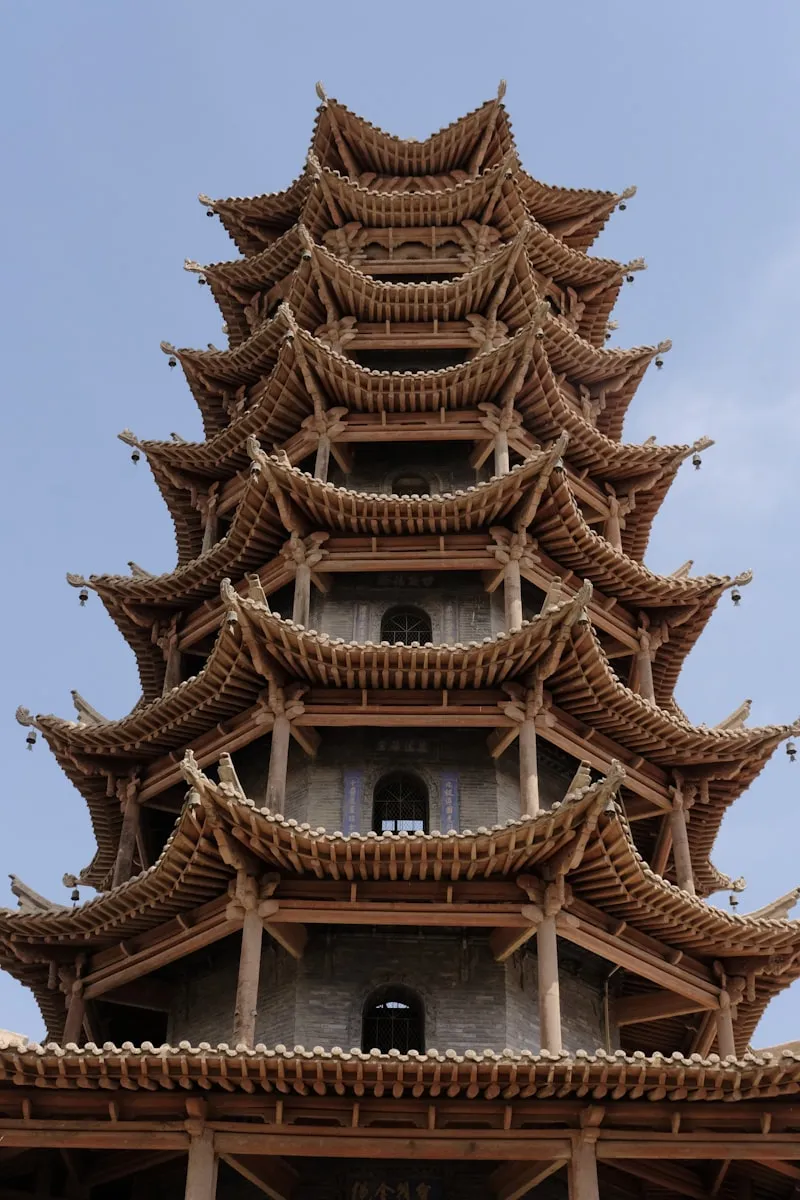
Steeper, upward-curving eavesIntricate multi-tier decorative dougongGreen-glazed roof tiles+2 more
Explore Song architecture
Yuan Dynasty architecture
1271-1368 CE

Yuan Dynasty

Mongol rule brought Tibetan Buddhist forms, Central Asian influences, and cosmopolitan craftsmen.

Key Features

Tibetan Buddhist stupas and templesCentral Asian decorative motifsPersian and Nepalese craftsmanship+2 more
Explore Yuan architecture
Ming Dynasty architecture
1368-1644 CE

Ming Dynasty

The Forbidden City, standardized timber modules, and the mature classical style.

Key Features

Standardized modular timber systemBrick and stone fortificationsYellow-glazed imperial roof tiles+2 more
Explore Ming architecture
Qing Dynasty architecture
1644-1912 CE

Qing Dynasty

Continued Ming forms with increasing ornamentation, garden architecture at its height.

Key Features

Highly ornate roof decorationExpanded ridge beast vocabularyGarden architecture zenith+2 more
Explore Qing architecture